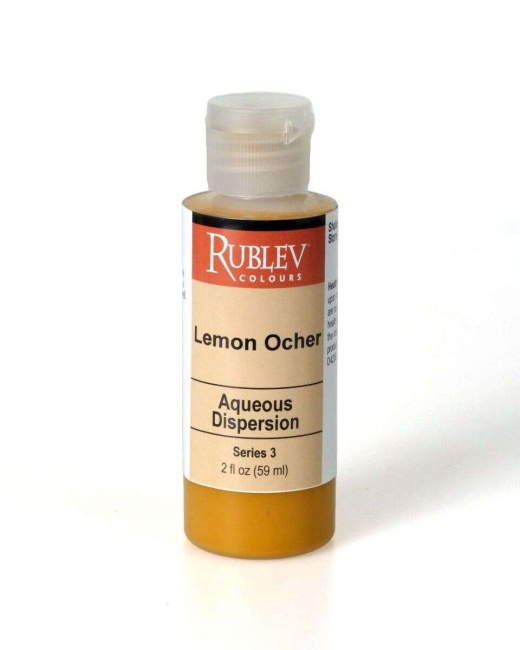
Lemon Ocher is a natural yellow iron oxide hydroxide mineral (goethite) from quarries in northern Italy. It is a bright yellow in tints and washes that is transparent. It has two major characteristics: it never fades in daylight, and the color is highly concentrated.
Rublev Colours Aqueous Dispersions are pigments dispersed in water ready to be mixed with water-based mediums. These dispersions are primarily used with traditional painting mediums, such as egg tempera, casein tempera, fresco, watercolors, and distemper (glue tempera). They are also ideally suited for use with gesso to make toned grounds for drawing and painting. Pigment dispersions from Rublev Colours contain only naturally-derived ingredients, in addition to pigment and water, making them ideally suited for traditional mediums. Unlike other pigment dispersions typically made for acrylic medium, Rublev Colours Aqueous Dispersions do not contain coalescent solvents, artificial dispersing resins, and other additives that interfere with natural mediums. Aqueous Dispersions make preparing traditional mediums easy; you do not have to hassle with powders, grinding pigments in medium, and calculating binder ratios to make water-based paint. They make adding the right amount of paint binder, such as egg yolk, a no-brainer because the right amount of water is already contained in the dispersion; add egg yolk.
| Pigment Names | |
| Common Names: | English: lemon ocher French: ocre citron German: Ocker Zitrone Italian: ocra citron Spanish: ocre limon |
| Synonyms: | Goethite, limonite, raw sienna, yellow earth, yellow ocher, yellow iron oxide, yellow hydrated oxide, and iron hydroxide pigment |
| Alternate Name: | Mars yellow is the name given to the synthetic form of yellow iron oxide hydroxide. |
Known since antiquity, ocher (okhra in Greek) occurs naturally as yellow ocher (goethite) or as red ocher (hematite). Ocher has been used as a pigment since prehistoric times and is perhaps the most widely used pigment for artists' paints.
SourceOcher is a natural earth containing clay tinted by hydrated iron oxide and is principally composed of the mineral goethite, clay, quartz, and gypsum or manganese carbonate. Historically, yellow ocher was designated by the mineral name limonite. Limonite is a general term to describe all forms of hydrated iron oxide minerals (α-FeOOH) that occur as natural earth. Limonite includes the minerals goethite, akaganeite, and lepidocrocite. The names of yellow iron oxide pigments are confusing. The names earth and ocher are suitable when it is clear that the pigment comes from a natural source. Earth is a more general term since ocher refers to a specific type of iron oxide deposit containing kaolin (clay) and quartz. For example, the iron oxide content must not be less than 12% to be considered an ocher. Depending upon the content of hydrated iron oxide, the color of ocher varies from light yellow to orange-red. Like red iron oxides (from the mineral hematite), they are found worldwide and have been used as pigments since prehistory. French ocher, historically one of the best grades of limonite, contains about 20% iron oxide and is high in silica.
Ocher is considered sienna, a yellow-brown pigment typically containing more iron ore than ocher and a small amount of manganese dioxide. Sienna is considered umber, which is darker brown when it contains a higher percentage of manganese dioxide. Burnt sienna is brown or bright red, and burnt umber is a darker brown than umber.
Ocher is not naturally usable as a pigment and therefore needs to undergo several critical processes, such as
-
Extract ore from the quarries.
-
Separate ocher from sand using water and centripetal force.
-
Blend different ocher extracted from diverse veins to obtain the selected colors.
-
Grind to 50 microns and pack.
Ocher is among the most permanent colors in the artist's palette. It is compatible with all other pigments and can be used with good results in all mediums.
Oil Absorption and GrindingOcher absorbs a moderately high amount of oil. The oil absorption ratio is 30–35 parts by weight of linseed oil to 100 parts by weight of pigment. If the measurement were grams, lemon ocher would require 30–35 grams of linseed oil to grind 100 grams of pigment to form a stiff paste. It slows the drying of oil paint but forms an excellent film.
ToxicityOcher is not considered toxic, but care should be used in handling the dry powder pigment to avoid inhaling the dust.
| Pigment Information | |
| Color: | Yellow |
| Colour Index: | Pigment Yellow 43 (77492) |
| Chemical Name: | Iron Oxide Hydroxide |
| Chemical Formula: | α-FeOOH |
| ASTM Lightfastness Rating | |
| Acrylic: | I |
| Watercolor: | I |
| Properties | |
| Density: | 2.9–4.3 |
| Hardness: | 4.0–5.5 |
| Refractive Index: | 2.260–2.398 |