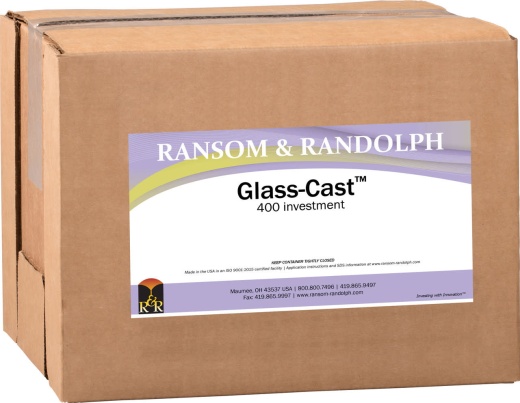
Glass-Cast 400 Investment for Stronger Mold Making
Looking for a stronger and more economical mold material for your glass art projects? Look no further than Glass-Cast 400 investment from Ransom & Randolph. This high-quality investment material provides added strength for larger molds and intense processes, making it ideal for glass artists who struggle with mold integrity. With its improved compressive strength and permeability, Glass-Cast 400 investment is the perfect choice for crucible casting and other glass applications.
Key Properties of Glass-Cast 400 Investment
Glass-Cast 400 investment has a number of key properties that make it an ideal choice for glass artists. It has a water/powder ratio of 34/100, a pour time of 10-11 minutes, and a set time of 4½-5 inches slump. It also has a green compressive strength of 680 psi and a post-fired compressive strength of 100 psi. Additionally, it has a mixed density of 1.82 g/ml and a permeability of 0.036 Darcy.
How to Use Glass-Cast 400 Investment
Using Glass-Cast 400 investment is a straightforward process. First, mix 100 parts of the powder with the appropriate amount of water by weight. Mix for 2-3 minutes, then pour the mixture into a mold frame or flask. Allow the mixture to set for at least 1 hour before removing the pattern. The mold can then be cured in a kiln or furnace before applying glass frit.
Benefits of Glass-Cast 400 Investment
Glass-Cast 400 investment offers a number of benefits for glass artists. It provides added strength for larger molds and intense processes, making it ideal for artists who struggle with mold integrity. It is also an economical alternative to traditional investment materials, making it a cost-effective choice for artists of all levels.
Safety Precautions when Using Glass-Cast 400 Investment
As with any investment material, it is important to follow proper safety precautions when using Glass-Cast 400 investment. Make sure to wear protective gear, including gloves and a mask, when mixing and applying the material. Additionally, follow the instructions for use and safety precautions outlined on the Material Safety Data Sheet (MSDS).