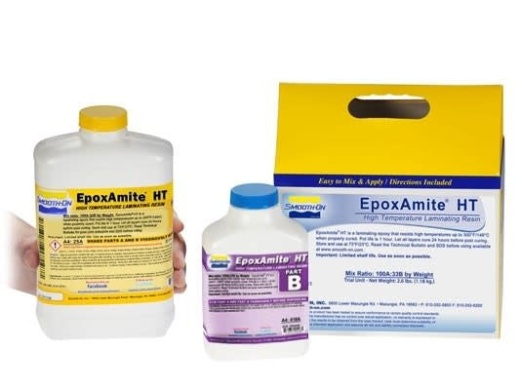
EpoxAmite HT High Temperature Laminating Epoxy
EpoxAmite HT High Temperature Laminating Epoxy is a water clear, UV resistant laminating epoxy that resists high temperatures up to 300°F / 149°C when properly cured. This epoxy is perfect for making composite tooling or parts, high temperature pre-preg parts, bonding fixtures, vacuum form molds and prototype injection molds. It can be used with S-Glass, E-Glass, Kevlar and carbon fibers, and its ultra-low viscosity ensures uniform wetting out and fast penetration of reinforcement materials during hand lay-up or vacuum infusion processes.
Key Features and Benefits
EpoxAmite HT High Temperature Laminating Epoxy has a pot life of 1 hour and a cure time of 24 hours at 73°F / 23°C (post cure required). It offers superior physical properties and can be used as a backup laminating resin for EpoxAcoat HT high temperature surface coat epoxy. Additionally, it can be colored with UVO colorants from Smooth-On, and adding fillers such as dry fillers can enhance its properties.
Applying and Curing
To apply EpoxAmite HT High Temperature Laminating Epoxy, pour the mixed epoxy up to 1/2” (1.28 cm) thickness and apply multiple layers quickly. Use a foam brush or roller to evenly spread a thin layer of resin over the surface, and apply reinforcement fabric evenly into the resin. Ensure the fabric ply is saturated, and use a lamination roller to evenly distribute the epoxy and reduce air bubbles. The cured material will be hard and unable to penetrate with a finger nail.
Post Curing and Finishing
After the epoxy has cured, it can be post cured according to the recommended schedule to achieve a heat distortion temperature of 300°F / 149°C. The post cured epoxy can be dry sanded, and if machining or sanding, wear a NIOSH approved mask to prevent inhalation of particles. The epoxy can also be painted and/or primed and then painted with acrylic enamel paints.
Safety Precautions
When working with EpoxAmite HT High Temperature Laminating Epoxy, it is essential to follow safety precautions. Avoid breathing fumes, use in a well-ventilated area, and wear safety glasses, long sleeves, and rubber gloves to minimize skin contact. NIOSH approved respirator is recommended, and do not mix components in glass or foam containers. Materials should be stored and used in a room temperature environment (73°F/23°C).